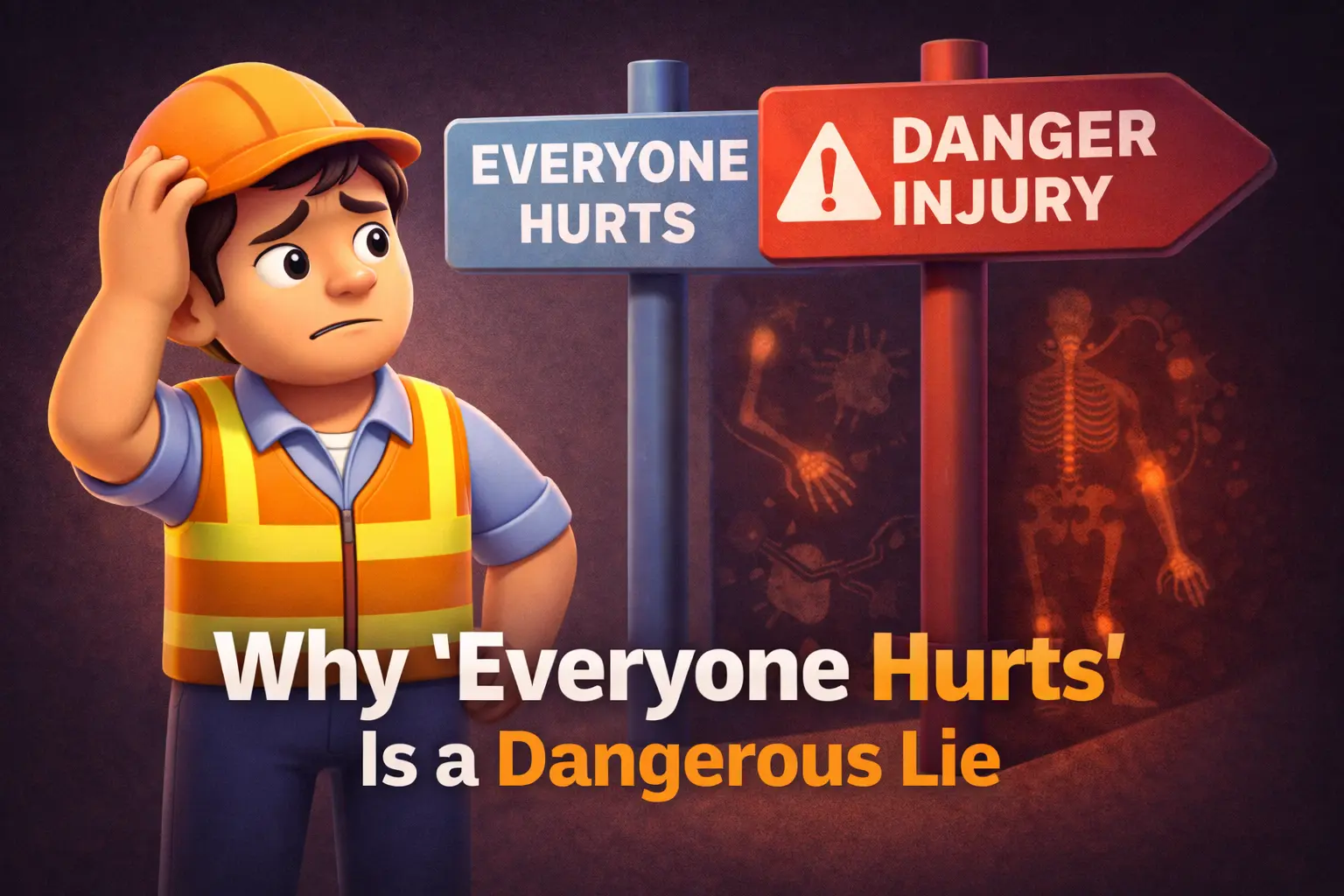
Normalizing pain doesn’t make it normal. It just keeps people broken.
“Everyone hurts.”
It’s said casually. Almost automatically. On job sites, in warehouses, in locker rooms, during smoke breaks.
Sore back? Everyone hurts. Stiff knees? Everyone hurts. Shoulders burning before lunch? That’s just part of the job.
This phrase sounds harmless. Even comforting. It makes pain feel shared instead of personal.
But “everyone hurts” is not wisdom. It’s a coping mechanism — and a dangerous one.
This article breaks down why this belief exists, why it’s wrong, and how it quietly pushes physical workers from manageable stress into long-term damage.
Table of Contents
- Where “everyone hurts” really comes from
- How pain became normalized in physical work
- Fatigue vs pain: the line people blur
- The mental shift that makes pain invisible
- Why this belief is physically dangerous
- How ignored pain spreads damage
- The comparison trap that keeps people stuck
- Toughness culture and delayed breakdown
- Early warning signs people dismiss
- The long-term cost of believing the lie
- What “normal” should actually mean
- The blunt truth
Where “everyone hurts” really comes from
This phrase didn’t come from science or medicine. It came from survival.
Physical work has always demanded endurance. Historically, stopping because of pain wasn’t an option. You worked injured, sore, stiff, or you didn’t work at all.
Over time, pain stopped being questioned and started being expected.
“Everyone hurts” became a way to normalize something that felt unavoidable. It helped people mentally tolerate discomfort they couldn’t escape.
The problem is that what starts as mental survival slowly becomes physical neglect.
How pain became normalized in physical work
There is a difference between discomfort and damage. Physical work blurred that line.
Discomfort after heavy effort is normal. Short-term soreness is normal. Temporary stiffness is normal.
What is not normal:
- Pain that appears every day
- Pain that lasts longer each year
- Pain that changes how you move
Normalization happened because addressing pain takes time, resources, and recovery — things most workers don’t have.
So pain became background noise.
And once pain becomes background noise, it stops triggering action.
Fatigue vs pain: the line people blur
This is where most people get it wrong.
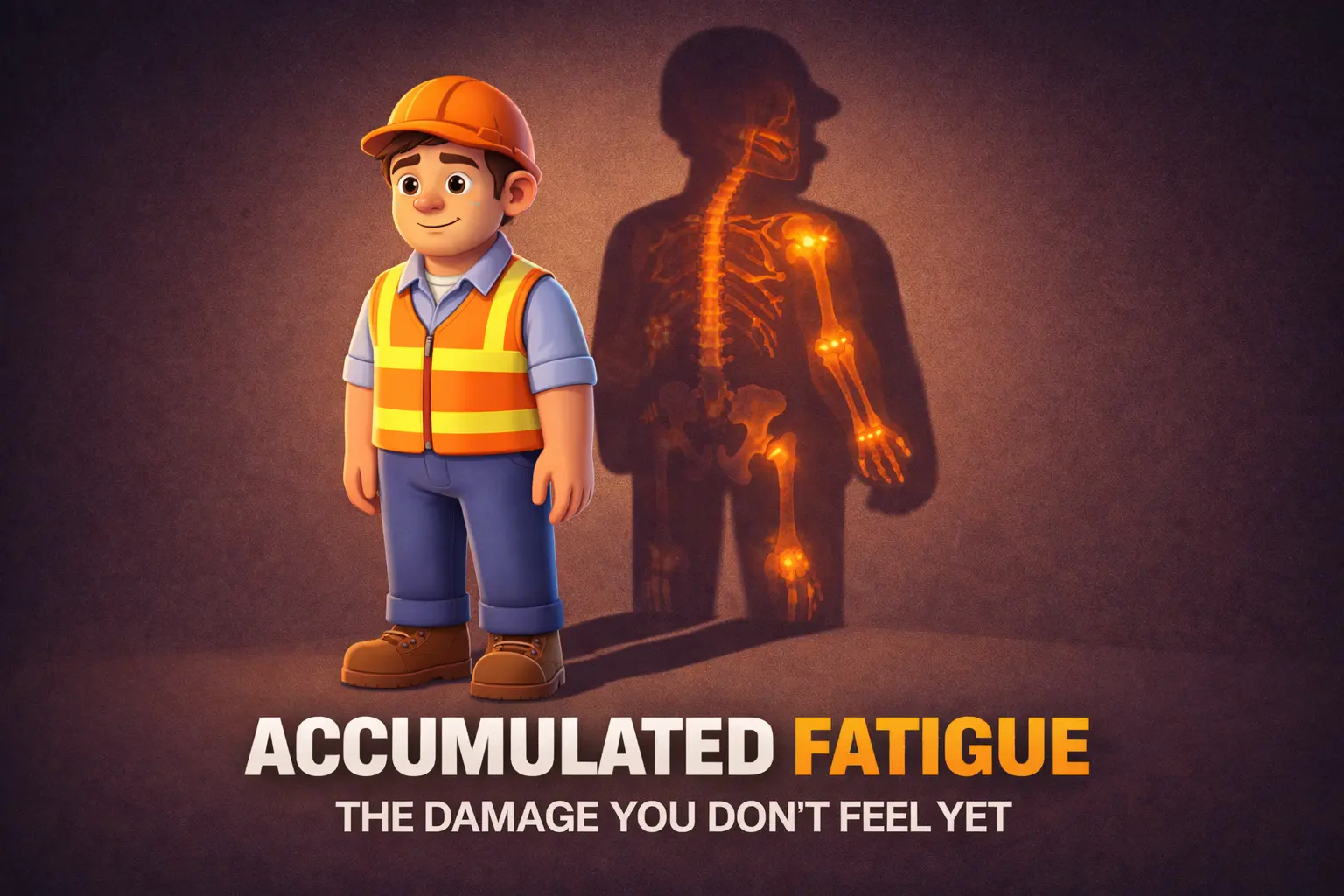
Fatigue is a temporary drop in capacity. Pain is information.
Fatigue clears with recovery. Pain persists when something isn’t resolving.
Fatigue does not change how you move. Pain does.
When people say “everyone hurts,” they treat pain like fatigue — something to push through instead of something to listen to.
This is how early damage gets ignored.
The mental shift that makes pain invisible
Once pain is normalized, the brain stops flagging it as a problem.
You stop asking:
- Why does this hurt?
- Why is it worse this year?
- Why doesn’t it fully go away?
Instead, pain becomes part of identity.
“This is just how my body is now.”
That belief is incredibly dangerous — because the body is always changing, whether you intervene or not.
Why this belief is physically dangerous
“Everyone hurts” discourages action.
If pain is universal, then it doesn’t require response. No recovery. No adjustment. No prevention.
This belief delays intervention until pain becomes severe.
By the time pain forces attention, the body has already adapted around damage — and adaptation is never free.
How ignored pain spreads damage
The body hates pain. When something hurts, it finds another way to move.
This is compensation.
You shift load. You brace harder. You avoid ranges.
These strategies reduce pain temporarily — but increase stress elsewhere.
Ignored pain doesn’t stay local. It spreads.
This is why pain migrates over years instead of disappearing.
The comparison trap that keeps people stuck
One of the most damaging habits in physical work culture is comparing pain.
“Mine isn’t as bad as his.” “She works through worse.” “He’s older and still going.”
Pain comparison minimizes individual signals.
Someone else enduring damage doesn’t make your pain harmless. It just means two people are accumulating damage at different rates.
Toughness culture and delayed breakdown
Toughness is rewarded in physical jobs. Longevity is not.
Working through pain earns respect. Preventing injury earns silence.
The problem is toughness delays injury — it doesn’t prevent it.
The toughest workers often break the hardest because they ignore warning signs the longest.
Early warning signs people dismiss
Before the body breaks, it whispers.
Common early signals:
- Pain starting earlier in the shift
- Morning stiffness lasting longer
- Reduced comfortable range of motion
- Longer warm-up time
“Everyone hurts” teaches people to ignore these whispers until the body has no choice but to shout.
The long-term cost of believing the lie
Most people don’t leave physical work because of one injury.
They leave because pain becomes constant, recovery stops working, and options disappear.
Ignoring pain early trades short-term endurance for long-term limitation.
By the time action feels necessary, damage is harder to reverse.
What “normal” should actually mean
Normal does not mean painless.
Normal means pain resolves. Function stays stable. Capacity doesn’t steadily decline.
Soreness sometimes is normal.
Chronic pain accepted as identity is not.
The blunt truth
“Everyone hurts” is not truth — it’s resignation.
It keeps people quiet while damage accumulates.
Pain is common. But common does not mean acceptable.
The earlier pain is taken seriously, the longer the body stays usable.
This article is general recovery education, not a diagnosis or a substitute for care from a qualified clinician. Stop and get medical help for severe pain, numbness, weakness, chest pain, sudden swelling, fever, or symptoms that keep worsening.

Log in to leave a comment.