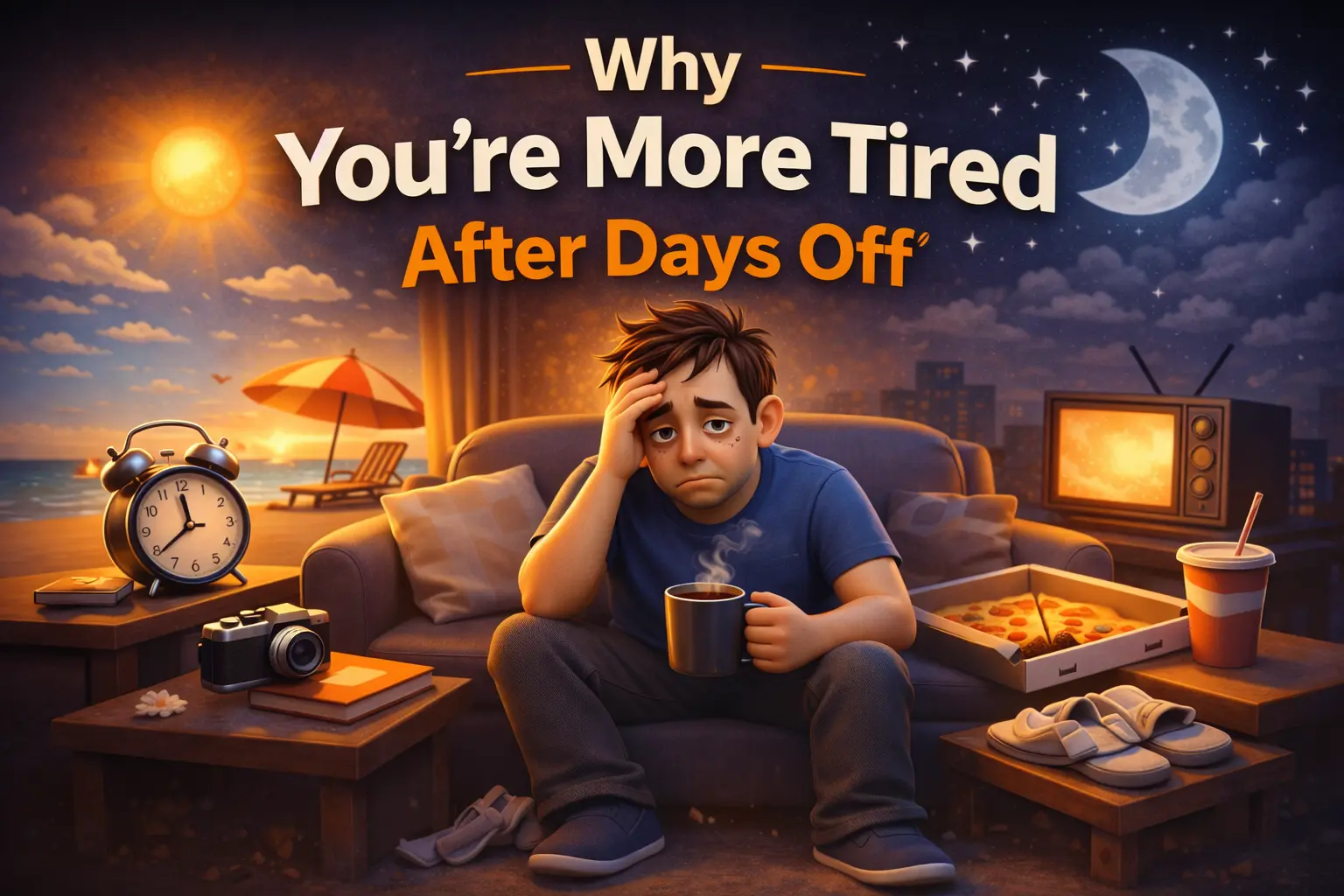
Your body didn’t “recover.” It lost rhythm.
You finally get days off. You sleep longer. You stop moving. You do “nothing.”
Then Monday hits and you feel heavier, stiffer, foggier, and more exhausted than you did on Friday.
This isn’t laziness. It’s not “getting older.” And it’s not proof you’re weak.
It’s a recovery problem caused by broken rhythm. Physical workers don’t recover from “rest” the way office workers do. Your job loads joints, tendons, connective tissue, and your nervous system. When you remove all structure at once, your body doesn’t bounce back — it loses readiness.
Table of Contents
- The Core Idea: Recovery = Rhythm + Reduced Load
- Rest vs Recovery (Why “Sleep More” Doesn’t Fix You)
- Why Rhythm Beats Comfort
- Why Doing Nothing Makes You More Tired
- The Nervous System Crash After Days Off
- Oversleeping: The Weekend Trap
- The Monday Effect: Why Work Feels Harder After “Rest”
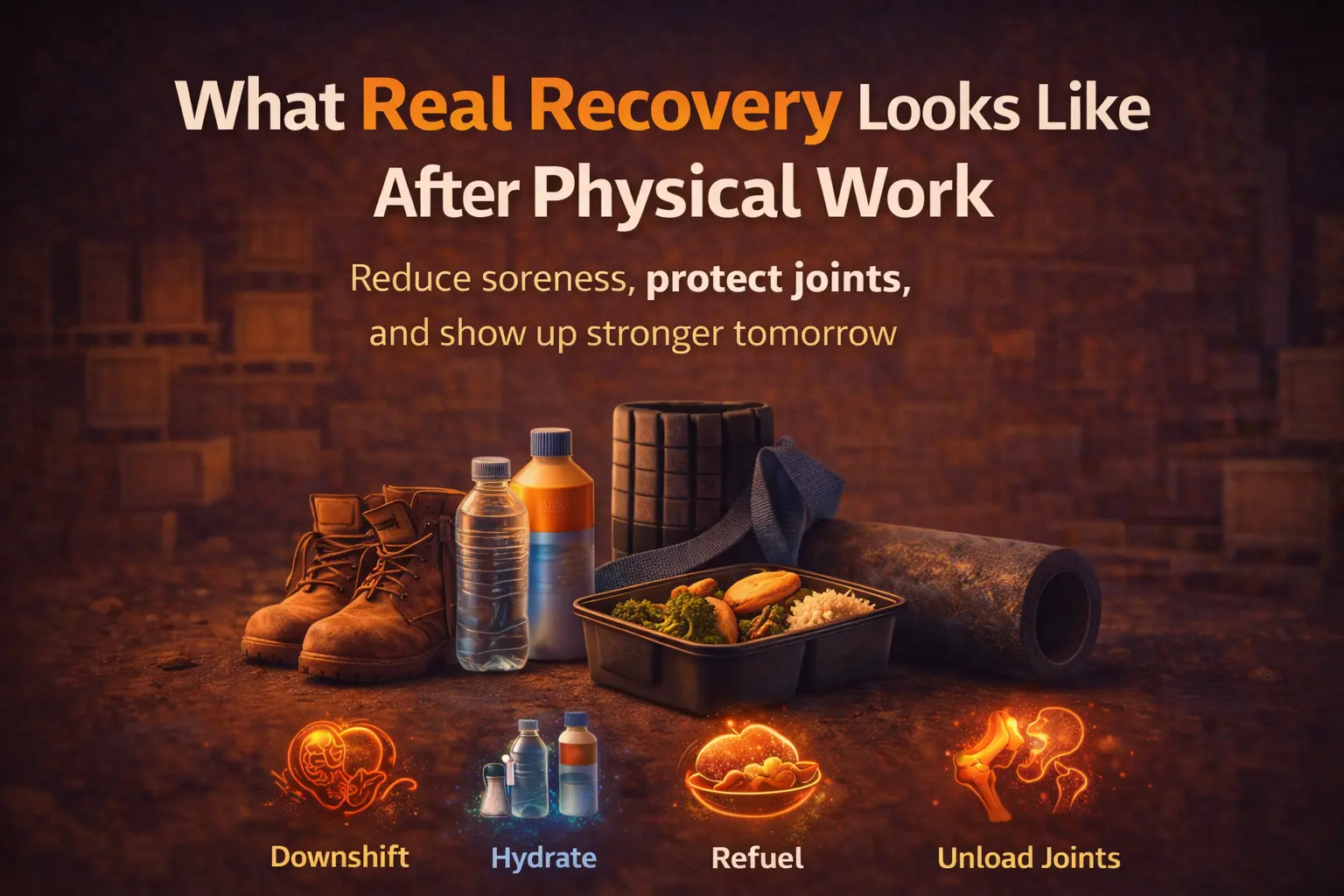
- What Real Recovery Days Look Like
- 3 Recovery Day Templates (Pick One)
- Top Mistakes That Keep You Stuck
- Work Pain vs Injury Check (Fast Screen)
- FAQs
The Core Idea: Recovery = Rhythm + Reduced Load
Most people think recovery means “doing nothing.” That’s only half true — and for physical workers it often backfires.
Real recovery is controlled reduction of load while keeping rhythm.
Rhythm means your body knows what time you wake, when you move, when you eat, and when you sleep. Load means how much you stress joints, tissue, and your nervous system.
Think of it like this:
Workdays = high load + consistent rhythm.
Good days off = lower load + consistent rhythm.
Bad days off = zero load + chaotic rhythm.
Bad days off feel relaxing in the moment, then punish you later. That’s exactly why the post Rest vs Recovery: Why Sleeping Isn’t Fixing You matters — the idea that sleep alone repairs everything is a trap.
Rest vs Recovery (Why “Sleep More” Doesn’t Fix You)
Rest is stopping work. Recovery is restoring capacity.
Physical work drains capacity in ways people don’t notice until it’s late:
- Micro-damage in tendons and joints
- Loss of joint “glide” and lubrication
- Stiffness from low circulation + repetitive patterns
- Nervous system fatigue (you’re “wired” all week)
If you stop moving completely, you reduce circulation and joint lubrication — and you don’t actually rebuild tolerance.
| What You Think Helps | What Actually Happens | Better Option |
|---|---|---|
| Sleep in 3–4 hours | Rhythm breaks, Sunday night worsens | Sleep in max 60–90 minutes |
| Lay on the couch all day | Stiffness, poor joint flow | Walk + move every 2–3 hours |
| Do zero load | Tissues “downshift” and feel weak | Light load (carry, mobility) |
| Random meals | Energy crashes + fog | Keep meal timing boring |
This is also why repetitive work quietly wrecks joints: Micro-Damage: How Repetitive Work Destroys Joints Quietly.
Why Rhythm Beats Comfort
Your body is a pattern machine. It predicts the next day using the last few days.
When you keep a stable rhythm, your body stays “ready” even if you reduce the load. When you nuke the schedule, your body drops readiness and you feel heavy.
Brutal truth: your best days off often feel “less relaxing” in the moment, but you feel better on Monday.
This ties into the long-game decline described here: Why Pain Shows Up Earlier Every Year. Rhythm loss accelerates how early fatigue and pain show up.
Why Doing Nothing Makes You More Tired
“I did nothing and I’m still tired” is common for physical workers. Here’s why it happens.
1) You lose circulation-driven recovery
Movement pumps blood and lymph through areas that get hammered at work. Less movement = less cleanup.
2) Joints dry out
Joints don’t have great direct blood supply. They depend on movement for lubrication. Sit all day and you feel like a rusty door hinge on Monday.
3) Tendons downshift
Tendons like consistent input. Too much load is bad. But zero load makes them feel weak and “sticky” when you return to work.
| Symptom After Days Off | Likely Cause | Fast Fix |
|---|---|---|
| Stiff knees/hips/back | Low movement + joint dehydration | Walk 10–20 min + mobility |
| Heavy legs | Circulation down + under-stimulation | Short brisk walk + light carries |
| Brain fog | Sleep timing shift + meal chaos | Morning light + same meal times |
| Low motivation | Nervous system “under-primed” | Move early, not late |
If you’re thinking “this sounds like I’m damaged,” read this next: Why “Everyone Hurts” Is a Dangerous Lie. Pain and fatigue are signals — not badges.
The Nervous System Crash After Days Off
This is the part most recovery advice ignores.
During workdays, your nervous system stays slightly elevated:
- more alert
- more reactive
- more “on”
Days off often swing the opposite direction: low stimulation, long sitting, late mornings, scrolling, junk meals.
Your nervous system drops below baseline. You feel flat. Heavy. Foggy. Sleep doesn’t feel restorative.
Key idea: You’re not tired because you did too much. You’re tired because your system is under-primed.
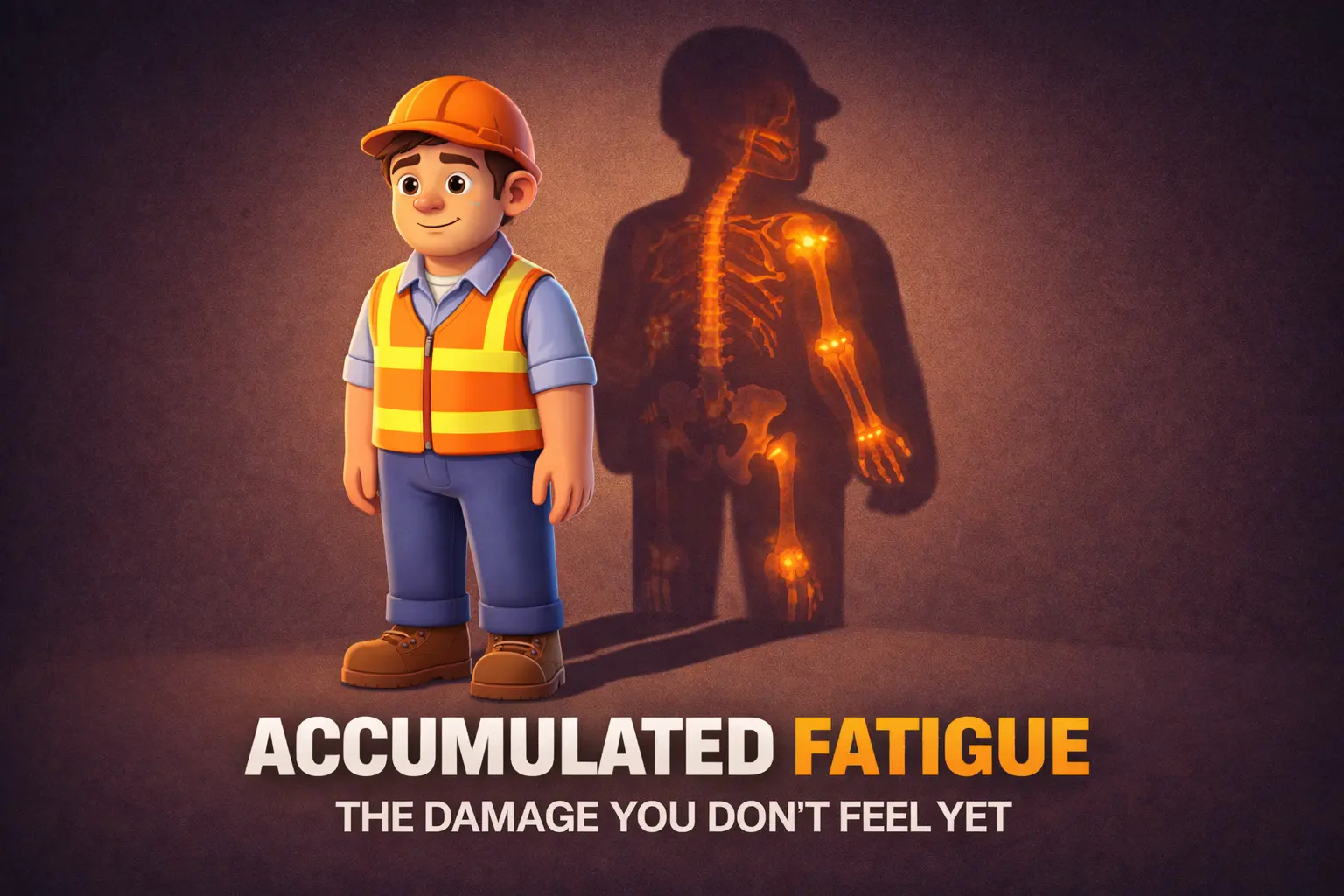
That under-primed feeling is part of accumulated fatigue — the kind that doesn’t scream until it breaks you: Accumulated Fatigue: The Damage You Don’t Feel Yet.
Oversleeping: The Weekend Trap
Oversleeping is the #1 “good intention” that wrecks Monday.
Here’s what happens:
- You wake later → your body clock shifts.
- You feel groggy → you move less.
- You get less daylight early → your rhythm drifts further.
- Sunday night you’re not sleepy → bedtime shifts later.
- Monday you wake early anyway → you feel destroyed.
| Weekend Habit | Monday Result | Fix |
|---|---|---|
| Sleep in 3+ hours | Fog + low energy | Cap sleep-in to 60–90 minutes |
| No morning light | Rhythm drift | 10 minutes outdoor light early |
| Late naps | Worse night sleep | Naps before 15:00 only |
If sleep doesn’t fix you, it’s not because sleep is useless — it’s because you’re using it as a substitute for recovery systems: Rest vs Recovery.
The Monday Effect: Why Work Feels Harder After “Rest”
Monday pain and Monday fatigue don’t mean you’re weak.
It usually means:
- Less joint lubrication
- Less tissue readiness
- Nervous system not primed
- Rhythm shifted
Then you jump straight into high load again. It feels like a shock.
Reality: Work doesn’t feel harder because you rested. Work feels harder because you removed the rhythm your body uses to stay ready.
Important: don’t confuse “Monday stiffness” with injury. Quick reset here: Work Pain vs Injury.
What Real Recovery Days Look Like
Real recovery days are not lazy days.
They are low-load, high-rhythm days.
| Bad Day Off | Good Recovery Day | Why It Works |
|---|---|---|
| Wake whenever | Wake within 60–90 minutes of workdays | Protects rhythm |
| Sit most of the day | Move every 2–3 hours | Restores circulation |
| No load at all | Light load (carry, band work, stairs) | Keeps tissues “online” |
| Random meals | Same meal times | Energy stability |
This is why most “recovery content” online fails you: it’s written for sedentary people. Read: Why Most Recovery Advice Fails Physical Workers.
3 Recovery Day Templates (Pick One)
Pick the template that matches your reality. Do not overthink it.
Template A: The “I’m Dead” Recovery Day (Minimum Effective Dose)
- Wake: within 90 minutes of workdays
- Morning: 10–15 min walk outside
- Midday: 6–10 minutes mobility (hips, ankles, upper back)
- Evening: 10 min easy walk OR light band work
- Meals: 2–3 normal meals at normal times
Template B: The “I Want Monday Easy” Recovery Day
- Wake: within 60 minutes
- Morning: 20 min brisk walk + light stretching
- Midday: carry something moderate (bags, groceries) for 5–8 minutes total
- Evening: 10–12 minutes mobility + breathing downshift
Template C: The “Active Recovery” Day (Best for High Pain/Stiffness)
- Wake: same time
- Morning: 10 min walk + 10 min mobility
- Midday: 15–25 min easy cycling/walk
- Evening: light band pulls + gentle core stability
Top Mistakes That Keep You Stuck
| Mistake | Why It Hurts You | Replace With |
|---|---|---|
| Weekend sleep chaos | Rhythm drift → Monday crash | Cap sleep-in to 60–90 min |
| All-day sitting | Joints stiffen + circulation drops | Move every 2–3 hours |
| “Zero load” recovery | Tissues downshift and feel weak | Light load daily |
| Random meals + junk | Energy crashes + inflammation feel | Boring meals at set times |
| Late naps | Worse sleep quality | Naps before 15:00 |
If your baseline is already rough during the week, don’t ignore it. That’s not “normal.” See: Why You’re Exhausted After Work (Even When You Didn’t Do Much).
Work Pain vs Injury Check (Fast Screen)
Days-off fatigue sometimes hides real injury. Here’s a simple screen.
If you have ANY of these, treat it like injury (not “normal tired”):
- sharp pain that doesn’t warm up
- swelling, heat, redness
- numbness/tingling
- pain that worsens day-by-day
- loss of strength or grip
Full breakdown here: Work Pain vs Injury: Knowing the Difference Matters.
FAQs
Why do I feel more tired after resting?
Because you likely broke rhythm (sleep timing, movement frequency, meals) and your system became under-primed. Rest without rhythm often produces fog and stiffness instead of recovery.
Is it bad to sleep in on weekends?
If you’re a physical worker and Mondays destroy you, yes — big sleep-ins are usually the trigger. Keep it within 60–90 minutes.
Do I need to work out on days off?
No heavy workouts required. The goal is light movement + light load so tissues stay “online.” Walking, mobility, carries, bands.
What if I’m exhausted all week, not just after days off?
Then you’re probably running accumulated fatigue. Start here: Accumulated Fatigue and Why You’re Exhausted After Work.
How fast can this change?
Usually within 1–2 weekends. The moment you protect wake time, add light movement, and stop doing “zero load,” Monday improves.
Final Takeaway
If days off make you more tired, your body isn’t broken.
Your recovery is missing the two things physical workers need most: rhythm and light input.
Stop treating days off like hibernation.
Treat them like: same schedule, lower load.
That’s how you get a Monday that feels easier than Friday.
This article is general recovery education, not a diagnosis or a substitute for care from a qualified clinician. Stop and get medical help for severe pain, numbness, weakness, chest pain, sudden swelling, fever, or symptoms that keep worsening.
Log in to leave a comment.