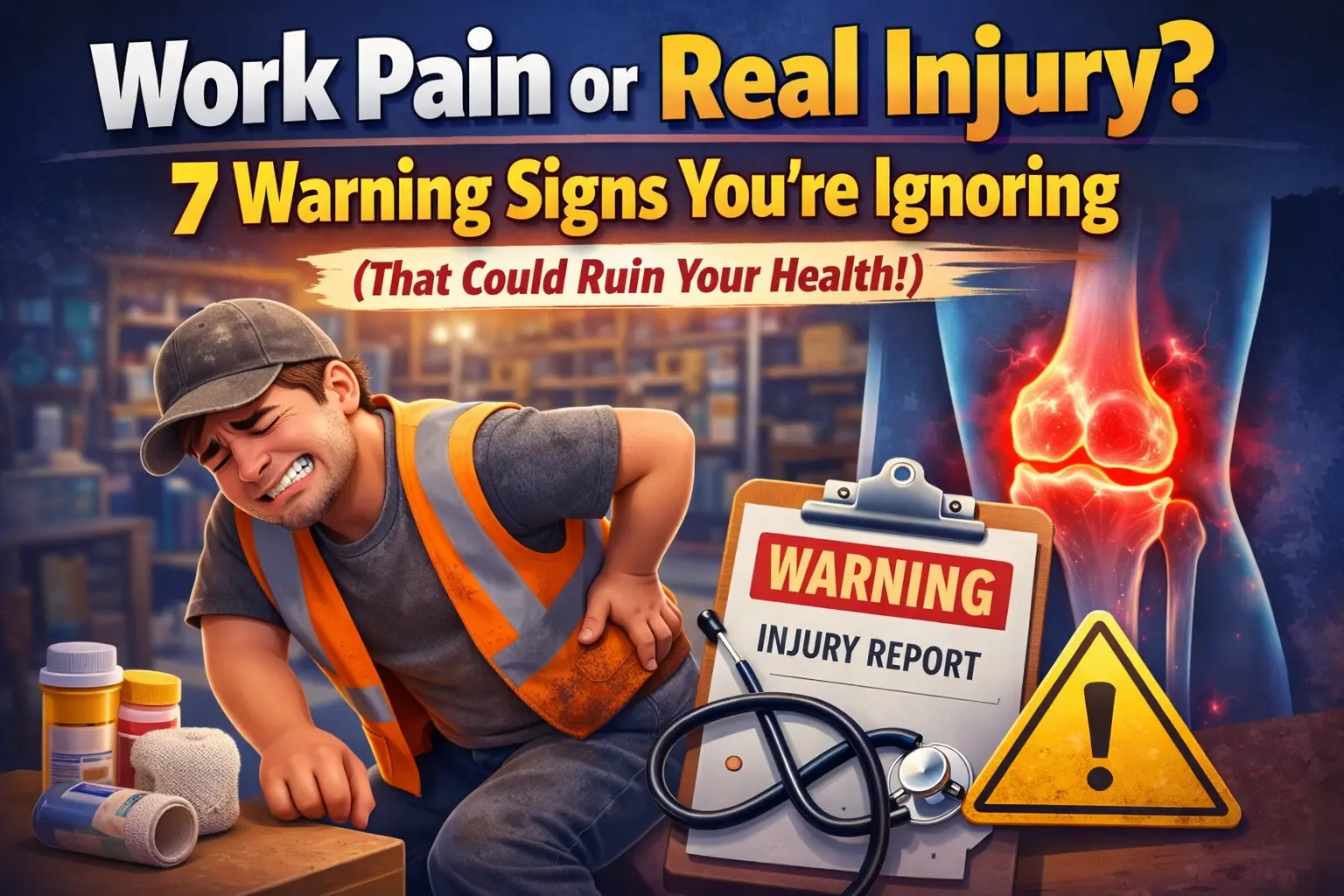
Why Young Workers Get Body Aches After Work So Fast (Warehouse/Construction) — The Real Causes
Last updated: January 22, 2026
Younger workers hurt faster now for one core reason: your daily load increased faster than your body’s capacity. Modern physical work is higher pace, more repetitive, more metric-driven, and less forgiving—while recovery (sleep, food, downtime) is usually worse. That mismatch creates body aches after work that feel “too early” for your age.
Quick answer (snippet-ready): Young workers get sore faster because pace + repetition is higher, sleep debt is common, and most bodies are not conditioned for repetitive load. It’s not “weakness.” It’s load management + recovery failure.
Table of Contents
- Definition: “capacity vs load” (the real mechanism)
- What changed in physical jobs
- Pain map: what hurts where (and why)
- The 9 root causes of faster pain in younger workers
- Step-by-step fix plan (minimum effective)
- Pros / cons: “push through” vs “manage load”
- Ergonomics & micro-technique (no expensive gear)
- Recovery stack: sleep, food, hydration
- Red flags: when it’s not normal soreness
- Sources & further reading
- FAQ
Definition: “capacity vs load” (the real mechanism)
Capacity is what your muscles, tendons, joints, and nervous system can tolerate today.
Load is what you demand from them today: steps, lifts, reaches, bending, vibration, awkward grips, time under tension, and pace.
When load repeatedly exceeds capacity, pain shows up faster. Age doesn’t protect you from this. A 19-year-old with low capacity and high load gets wrecked.
Practical translation: Your job is not “strength training.” It’s repetitive stress under fatigue. Without structured capacity-building, you accumulate micro-damage.
What changed in physical jobs
“Young people are softer” is a lazy take. The environment changed.
- Higher pace: tighter targets, constant scanning, fewer natural pauses.
- More repetition: same motion thousands of times per shift (picking, packing, reaching, bending).
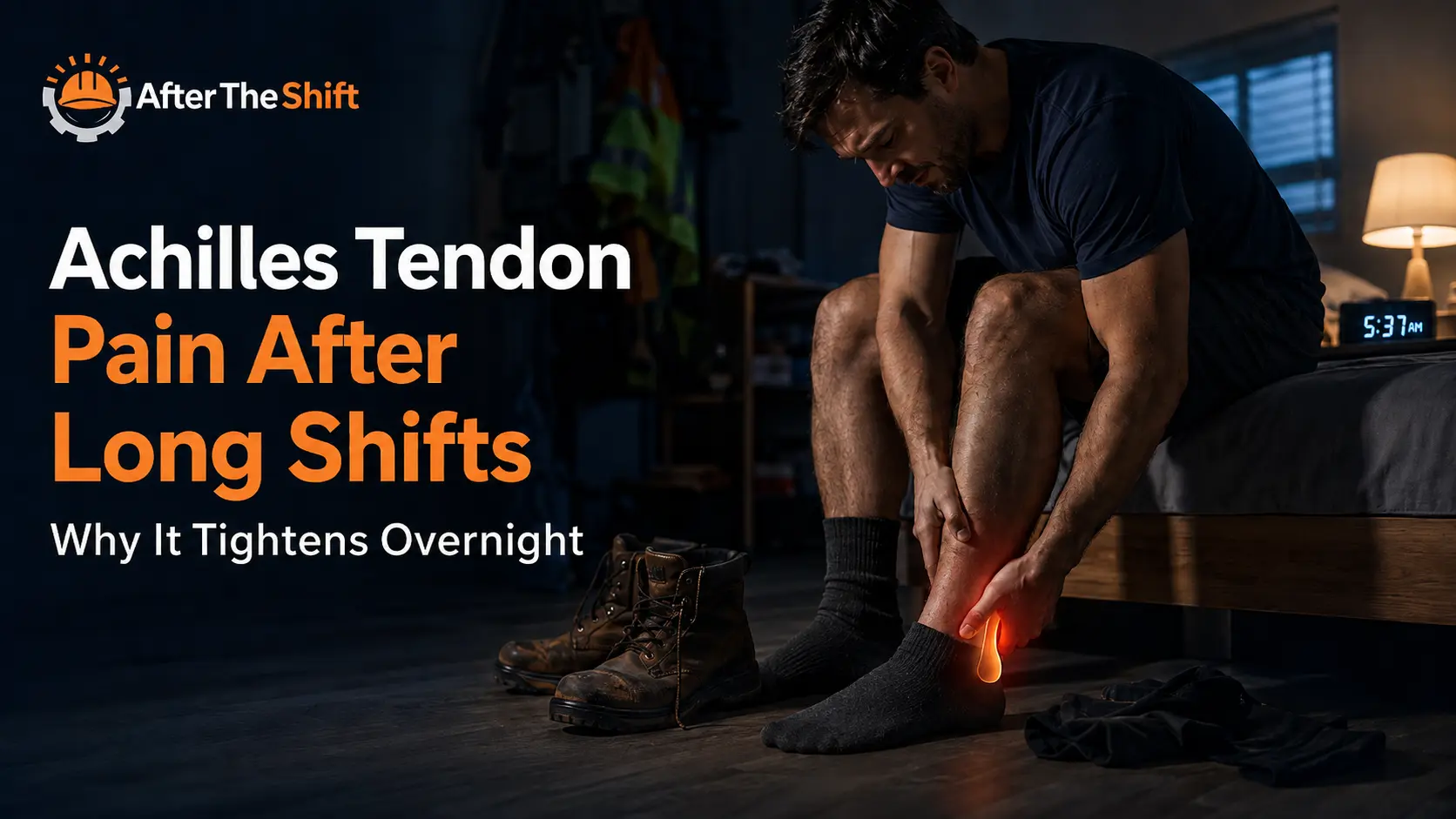
- Harder surfaces: concrete floors + long standing = feet, knees, hips, back take the bill.
- Worse recovery: sleep debt, late screens, inconsistent meals, low protein, low hydration.
- Sudden exposure: sedentary life → full-output shifts with no ramp-up.
If you want the bigger picture, read these related posts:
- What a normal workday does to the body
- Micro-damage: how repetition destroys joints quietly
- Rest vs recovery: why sleeping isn’t fixing you
Pain map: what hurts where (and why)
| Area | Common job pattern | Likely cause | Fast fix (today) |
|---|---|---|---|
| Feet / heels | Standing + walking on concrete | Low foot/calf capacity + bad cushioning | Insoles + calf/foot reset (2 minutes) |
| Knees | Steps + squats + twisting | Quad/hip weakness + sloppy mechanics under fatigue | Short quad work + reduce twist, pivot with feet |
| Lower back | Bending + lifting + reaching | Hinge breakdown + weak brace + fatigue | Brace drill + hinge reset + load closer |
| Shoulders / neck | Reaching + overhead + phone posture after work | Scap weakness + tight front chain | Scap sets + neck resets + screen rule |
| Wrists / forearms | Grip + scanning + vibration tools | Tendon overload + constant tension | Grip deload + micro-breaks + glove choice |
Targeted deep-dives you can use immediately:
The 9 root causes of faster pain in younger workers
1) Deconditioning (especially tendons + trunk)
Most people have less baseline strength for repetitive load than they think. Tendons adapt slowly. If your job ramps faster than tendon adaptation, pain appears early.
2) Sleep debt (recovery collapses first)
When you’re short on sleep, you get worse coordination, worse tolerance to pain, and slower repair. The shift feels heavier even if the workload is identical.
3) Load spikes (new job, overtime, “prove yourself” weeks)
The fastest way to get injured is jumping volume too quickly. Your tissues don’t negotiate.
4) Metric-driven pace (no micro-rest)
The body likes tiny pauses. Modern pacing removes them. No micro-rest means form degrades sooner, and small errors compound.
5) Hard floors + bad footwear
Concrete is undefeated. If your boots are wrong, the load migrates: feet → knees → hips → back.
6) Repetition > weight (overuse wins)
Most injuries in warehouses and trades are not from “one heavy lift.” They’re from 10,000 medium-stupid reps.
7) Weak hips + weak brace (the back pays)
When hips and trunk can’t stabilize, the spine does the work. Then the back becomes the “main mover.” That’s how chronic back pain starts.
8) Off-shift damage (screens, sitting, zero movement)
If you finish a shift and sit still for 6 hours, you lock stiffness in. You don’t “recover.” You solidify tightness.
9) Nutrition/hydration gaps (repair material missing)
Low protein, low fluids, low minerals + high stress = slower tissue repair and more cramps, headaches, and soreness.
Step-by-step fix plan (minimum effective)
This is not a motivational speech. It’s a system. Do the minimum that moves the needle.
Step 1 — Stop the daily load spikes
- First 2 weeks of a new role: avoid overtime if possible.
- Don’t “race” the job every day. Pick 2 high-output days, keep the rest controlled.
- If you’re already hurting: treat pain as a capacity warning, not a challenge.
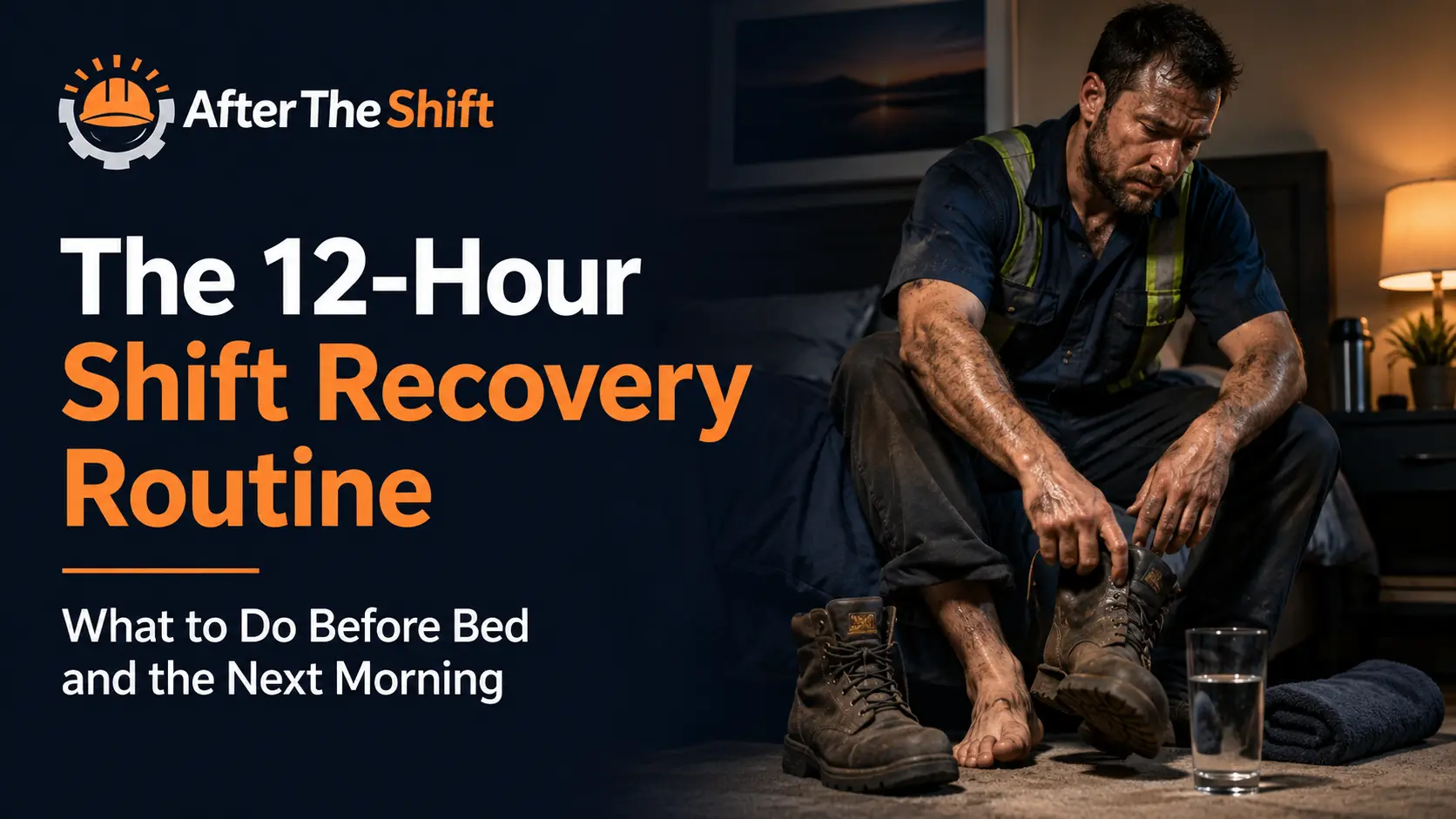
Step 2 — Daily 6-minute post-shift reset
6-minute reset: 2 minutes feet/calves + 2 minutes hips + 2 minutes brace/scap. No equipment. Do it immediately after shower or before dinner.
- Feet/calf: slow calf raises x 10 + toe lifts x 10 + 30s calf stretch each side.
- Hips: hip hinge practice (hands on hips) x 10 + glute bridge hold 30s x 2.
- Brace/scap: 5 deep nasal breaths bracing abs + scap squeezes x 12.
Step 3 — 2 strength “insurance” sessions per week (20 minutes)
You’re not training for aesthetics. You’re training for tendon capacity and joint stability.
- Split squat or step-ups (knees/hips)
- Hinge pattern (back/hamstrings)
- Row or band pull-aparts (shoulders)
- Carry holds (grip/trunk)
More on long-term durability here:
- Lasting longer in physical jobs without breaking down
- What real recovery looks like after physical work
Step 4 — Fix the three biggest “pain multipliers”
| Multiplier | What it looks like | What to do |
|---|---|---|
| Bad shoes | Heel pain, shin tightness, knee ache | Proper work footwear + insoles; replace worn pairs |
| Sleep chaos | Always sore, always irritable, headaches | Fixed wake time + 60-min screen cutoff |
| Technique drift | Bending gets sloppy late shift | Micro-reset every break: hinge + brace x 5 |
Pros / cons: “push through” vs “manage load”
| Approach | Pros | Cons |
|---|---|---|
| Push through | Looks tough short-term | Injury risk rises; pain becomes baseline; performance drops |
| Manage load | Stable performance; less pain; longer career | Requires routine + discipline (not vibes) |
Ergonomics & micro-technique (no expensive gear)
These are small changes with large return.
- Keep load close: the farther the box from your body, the more your back pays.
- Pivot with feet: twisting under load hits knees/back.
- Alternate grips: reduce tendon overload in wrists/forearms.
- Micro-break reset: every break: 5 hinges + 5 braces + 5 scap squeezes.
Recovery stack: sleep, food, hydration
Sleep
- Keep a fixed wake time.
- Stop caffeine 8 hours before bed if sleep is fragile.
- 60 minutes before bed: no doom scroll. Dim lights. Cool room.
Food (repair material)
- Protein anchor: 25–40g per meal.
- Add one “worker meal” you can repeat: rice + meat + veg; pasta + tuna + olive oil; eggs + potatoes.
Hydration
- If you sweat: water + electrolytes (or salted food) beats “just coffee.”
- Headaches and cramps often track hydration more than you think.
Red flags: when it’s not normal soreness
Get medical evaluation if you have any of these:
- Numbness/tingling that persists
- Weakness (dropping items, foot slaps, knee buckles)
- Pain that wakes you at night repeatedly
- Swelling, heat, redness around a joint
- Sharp pain that escalates weekly
Key takeaways
- Younger workers hurt faster now because load rose faster than capacity.
- Most “age-related” pain is pace + repetition + recovery debt.
- The fix is boring: load control, 6-minute reset, and 2 short strength sessions.
- Footwear and sleep are the highest ROI upgrades.
Actionable examples (real-world)
- If your feet burn by hour 4: insoles + calf routine daily for 14 days.
- If your back tightens late shift: hinge practice + brace reset every break; keep boxes closer.
- If knees ache after shift: stop twisting; pivot feet; add 2x/week step-ups.
- If wrists flare: rotate grip, loosen constant tension, add deload day for heavy grip tasks.
Sources & further reading
Authority references (not affiliate, just useful):
- NIOSH (workplace safety & ergonomics)
- OSHA ergonomics overview
- NHS sleep basics
- Sleep Foundation (sleep science basics)
FAQ
Is it normal to be sore after every shift?
Occasional soreness is normal. Constant soreness usually means your weekly load exceeds your recovery capacity. Fix sleep, footwear, and add a small capacity plan.
Why do my knees hurt after work but not during?
Fatigue hides problems during the shift. After work, inflammation and stiffness show up. Start with this knee breakdown and implement the 2x/week quad/hip work.
What’s the fastest way to reduce lower back pain after shifts?
Load closer, hinge better, brace under fatigue, and stop twisting with weight. Use the micro-reset and read this back pain guide.
Do I need the gym to stop hurting?
No. You need capacity. Two 20-minute sessions per week is enough if you hit legs, hinge, pull, and carries consistently.
Why does pain feel worse when I’m stressed?
Stress reduces sleep quality and increases sensitivity to pain. That doesn’t mean it’s “in your head.” It means your nervous system is more reactive.
Log in to leave a comment.