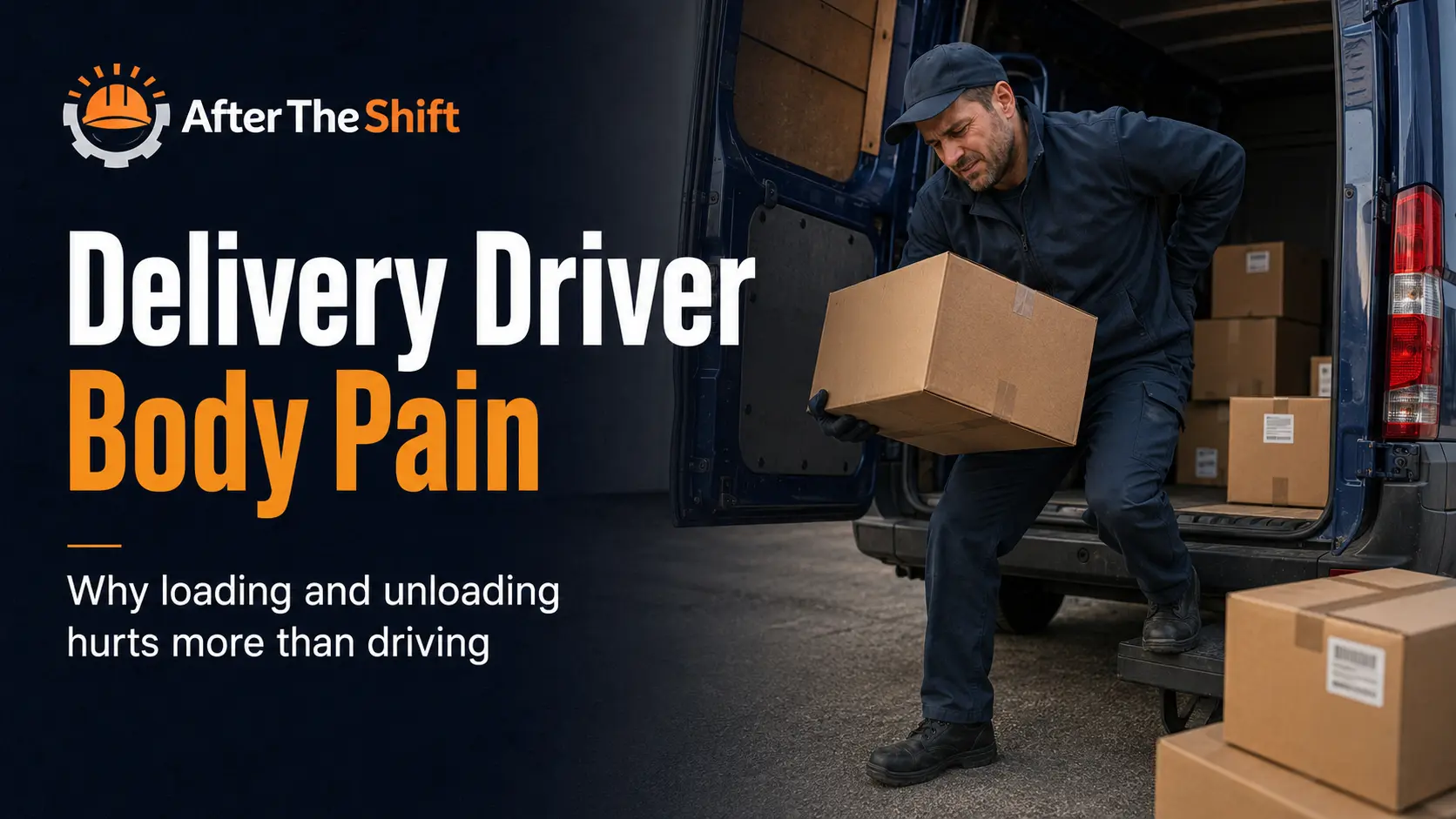
Most delivery driver body pain comes from repeated lifting, twisting, reaching, and rushing — this guide shows what is breaking down and how to stop it early.
Delivery driver body pain usually comes less from sitting behind the wheel and more from the repeated loading, unloading, twisting, stepping down, carrying awkward parcels, and rushing between stops. Driving stiffens the hips and back, but the real damage often happens when a tired body goes from sitting cold to lifting fast with bad angles.
Delivery driver body pain is usually a load-handling problem, not just a driving problem. The fastest fix is to reduce twist-lift movements, warm up before the first heavy stop, protect the lower back and knees during unloading, and treat pain that lasts past the next morning as a warning signal.
- Turn your feet before lifting or placing parcels.
- Use two trips for awkward boxes instead of one ugly carry.
- Reset your back and hips before the first heavy delivery.
- Track pain that returns earlier each shift.
- Twisting out of the van while holding weight.
- Jumping down from the van with parcels in hand.
- Ignoring numbness, sharp pain, or weakness.
- Calling every ache “just driving stiffness.”
If pain gets worse during loading, unloading, stairs, or stepping out of the van, treat it as a handling injury pattern — not as normal driving soreness.
| If you… | Most likely issue | Risk / flag | Best first move |
|---|---|---|---|
| Feel stiff after driving but loosen up after walking | Sitting stiffness | Low | Use 60-second hip and back resets between stop clusters. |
| Get sharp back pain when pulling boxes from the van | Twist-lift overload | Moderate | Stop twisting with load; turn hips and feet first. |
| Have knee pain stepping down from the van | Impact plus fatigue | Moderate | Step down empty-handed when possible; avoid jumping. |
| Feel numbness, tingling, weakness, or pain down the leg | Possible nerve irritation | High | Do not push through; get medical advice. |
- Why loading and unloading hurt more than driving
- How delivery job type changes the pain pattern
- Symptom → cause → fix matrix
- Decision tree: normal soreness or injury pattern?
- The 4 damage stages for delivery drivers
- Mini-test: how risky is your pain pattern?
- What actually fixes it before, during, and after work
- Treatment options compared
- Checklist for tomorrow’s shift
- FAQs
Why Loading and Unloading Hurt More Than Driving
Loading and unloading hurt more because they combine weight, awkward reach, rotation, speed, and fatigue in short bursts. Driving mainly keeps you stiff; handling parcels forces cold joints and tired muscles to produce power from bad positions.
Delivery work creates a repeat pattern: sit, stiffen, rush, lift, twist, step down, carry, climb, repeat. That cycle is rough on the lower back, knees, shoulders, elbows, wrists, and feet because the body never gets a clean warm-up or a clean recovery window.
Delivery driver body pain is more likely when the job has repeated van exits, awkward parcel reaches, stairs, time pressure, and one-sided carrying. The pain is not only from sitting; sitting makes the body stiff, then loading and unloading expose that stiffness under load.
| Movement | What it loads | Why it adds up | Better pattern |
|---|---|---|---|
| Pulling parcels from deep inside the van | Lower back, shoulders | Long reach plus bent spine | Slide item closer before lifting. |
| Twisting out of the side door with weight | Spine, hips | Rotation under load | Turn feet first, then lift. |
| Jumping down from the van | Knees, ankles, back | Impact repeats hundreds of times | Step down controlled, empty-handed when possible. |
| One-arm carrying | Neck, shoulder, low back | Side-bending and grip fatigue | Switch sides or use two hands for awkward loads. |
This usually applies to parcel couriers, grocery delivery drivers, furniture delivery helpers, van drivers, multi-drop drivers, and warehouse-to-door delivery workers. It does not apply to crash injuries, sudden severe trauma, chest pain, unexplained swelling, or neurological symptoms that need urgent assessment.
How Delivery Job Type Changes the Pain Pattern
Your delivery route decides which body part gets overloaded first. Multi-drop parcel work usually attacks the back and knees; grocery delivery adds grip and stairs; furniture delivery adds peak lifting risk.
| Job type | Main angle | Risk | Compounding factor |
|---|---|---|---|
| Parcel courier | Fast reach, twist, step-down | Moderate | High stop count with little recovery. |
| Grocery delivery | Carrying bags, stairs, grip | High | Awkward loads that shift while walking. |
| Food delivery | Bike/scooter posture, stairs, rushing | Moderate | Cold weather and repeated starts/stops. |
| Furniture/appliance delivery | Heavy lifts, awkward stairs, team handling | High | One bad lift can create a real injury. |
| Long-haul driver with occasional unloading | Long sitting then sudden handling | Moderate | Cold tissues after hours seated. |
The mistake is judging risk only by package weight. A light parcel can still hurt you if it is lifted from a long reach, carried on stairs, twisted out of the van, or handled hundreds of times in one shift.
Symptom → Cause → Fix Matrix
The pain location tells you which work pattern needs to change first. Use this matrix to separate normal fatigue from a repeated handling problem.
| Symptom | Likely cause | Fastest fix | Red flag |
|---|---|---|---|
| Lower back grabs when unloading | Twist-lift from van or boot | Pull item close, square hips, lift after turning. | Pain down leg, weakness, numbness. |
| Knees ache after route | Repeated step-downs and stairs | Step down controlled; avoid jumping with load. | Swelling, locking, giving way. |
| Shoulder burns after carrying parcels | One-sided carry and overhead reach | Switch sides, keep load close, avoid high reaches. | Loss of strength or night pain. |
| Wrist or thumb pain from parcels | Pinch grip, scanner use, bag handles | Use full-hand grip; reduce thumb-only handling. | Tingling or numb fingers. |
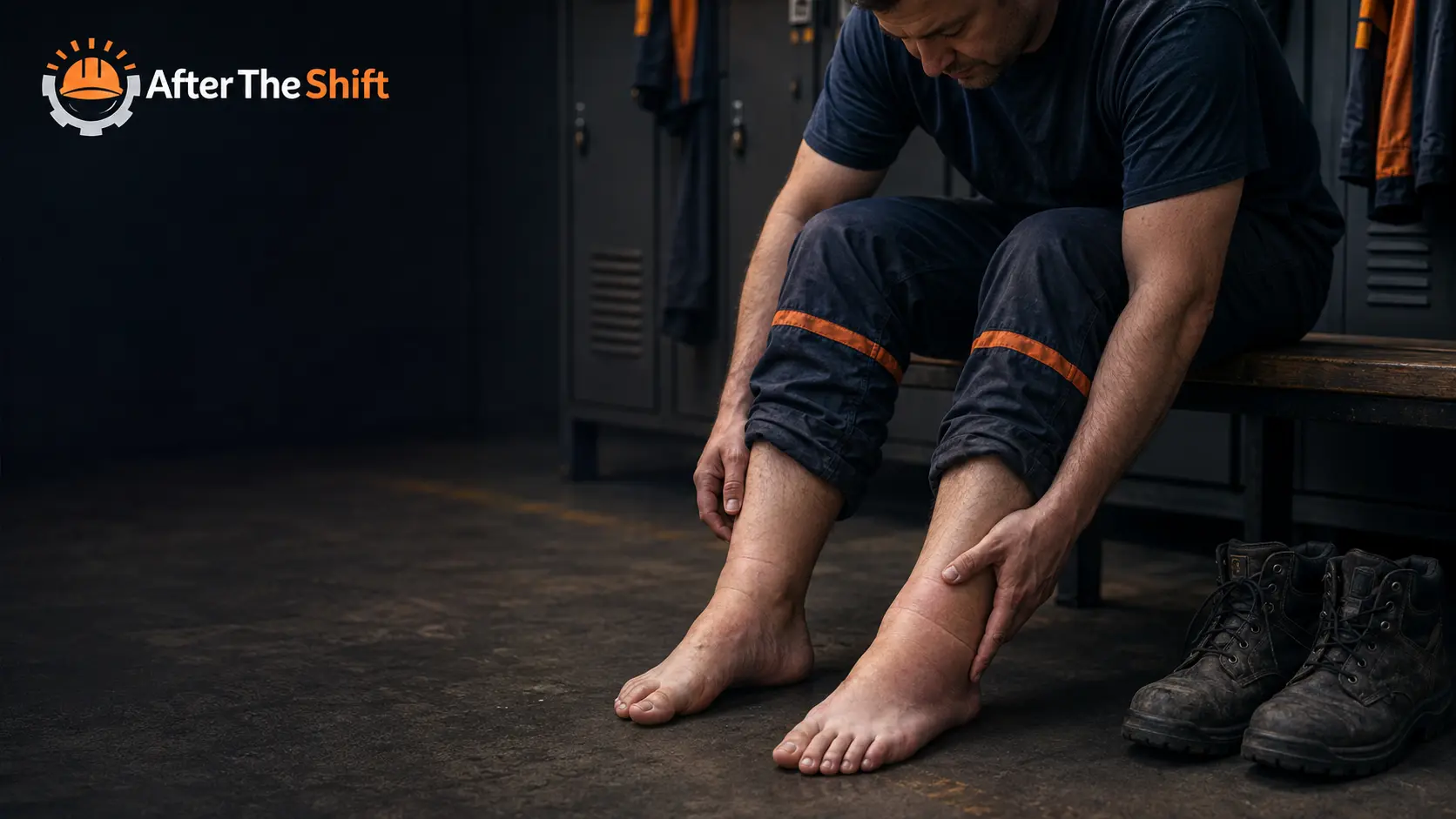
| Feet hurt worse after parking up | Impact, hard floors, worn footwear | Check boots, insoles, calf tightness, route walking volume. | Sharp heel pain every morning. |
Stop treating it as normal soreness if you get numbness, tingling, leg weakness, foot drop, pain after a fall, chest pain, severe swelling, a joint that gives way, or pain that keeps worsening despite reducing load for several days.
Decision Tree: Is This Normal Soreness or an Injury Pattern?
Use the decision tree when you are not sure whether to keep working normally, modify the shift, or get checked. The key criteria are duration, sharpness, spread, weakness, and whether the pain returns earlier each day.
Do you have numbness, tingling, weakness, pain down the leg, severe swelling, or a joint giving way?
The 4 Damage Stages for Delivery Drivers
Delivery driver pain usually becomes serious by progression, not by one dramatic moment. The warning sign is not pain alone; it is pain that appears earlier, lasts longer, spreads wider, or changes how you move.
| Stage | How it feels | What is happening | Recovery window | Action |
|---|---|---|---|---|
| Stage 1 | Tired, stiff, heavy legs or back | Normal fatigue plus sitting stiffness | Same day to next morning | Reset hips, calves, back; improve unloading angle. |
| Stage 2 | Pain starts mid-route | Tissue tolerance dropping | 24–48 hours | Reduce twist-lift, use two trips, stop jumping down. |
| Stage 3 | Pain starts early and changes movement | Poor recovery between shifts | Several days or more | Modify workload and get advice if not improving. |
| Stage 4 | Sharp pain, numbness, weakness, swelling | Possible injury or nerve/joint involvement | Unclear without assessment | Stop pushing through and get checked. |
A pain pattern is getting worse when it starts earlier in the route, needs less weight to trigger it, changes your walking or lifting, or still feels active the next morning. Those signs matter more than how tough you think you are.
Mini-Test: How Risky Is Your Pain Pattern?
This 10-point test ranks your pain pattern by work risk, not by toughness. Score it after a normal route, not after a rare easy day.
Choose yes or no for each question.
What Actually Fixes It — Before, During, and After Work
The fix is not one magic stretch; it is reducing bad load moments across the whole shift. You need a before-work warm-up, during-route handling rules, and after-shift recovery that matches the pain pattern.
Before route
- Do 2 minutes of hip, back, and calf movement.
- Check footwear and laces before loading.
- Place heavy parcels where you can reach them squarely.
- Do not start with a cold twist-lift.
During route
- Turn feet before lifting or placing parcels.
- Use two trips for awkward items.
- Step down controlled, not fast.
- Switch carrying sides before one shoulder burns.
After shift
- Walk 5–10 minutes before collapsing on the sofa.
- Use light mobility, not aggressive stretching into pain.
- Check if pain is gone by next morning.
- Record the trigger: stairs, van exit, heavy box, or long carry.
The best first fix for delivery driver body pain is to remove twist-lift moments. Before lifting, pull the parcel close, square your hips, turn your feet toward the drop direction, then lift. This costs seconds but removes the angle that usually overloads the back.
Treatment Options Compared
The right treatment depends on whether your pain is fatigue, stiffness, irritation, or a possible injury. Do not use recovery tools to hide a handling pattern that keeps causing the same pain.
| Treatment | Best for | Skip if | Cost / time |
|---|---|---|---|
| Movement resets | Sitting stiffness and mild back tightness | Sharp pain or nerve symptoms | Free; 2–5 minutes |
| Better parcel staging | Back pain during unloading | You cannot control van loading at all | Free; route habit |
| Supportive footwear / insoles | Foot, knee, and standing pain | Pain is from sharp injury or swelling | Budget to moderate |
| Heat | General stiffness after route | Fresh swelling or inflamed joint | Cheap; 10–20 minutes |
| Cold pack | Local soreness after overload | Numb skin or circulation issues | Cheap; 10–15 minutes |
| Physio / medical assessment | Persistent, sharp, spreading, or recurring pain | Pain is mild and clearly improving | Higher cost; best for unclear cases |
Painkillers may help you finish a shift, but they can also hide the signal that your loading pattern is failing. If the same pain returns every route, the main fix is changing the work mechanics, not just reducing pain after work.
Checklist for Tomorrow’s Shift
Use this checklist to remove the most common delivery-driver pain triggers before they become automatic. It is built for parcel, grocery, and multi-drop drivers who still have to work tomorrow.
Bottom Line
Delivery driver body pain is usually a repeated handling problem made worse by sitting stiffness. The best choice is to fix loading angles, van exits, stairs, carrying strategy, and recovery before the pain starts appearing earlier in the route.
Best first move: remove twist-lifts from unloading. Best budget fix: controlled step-downs, two-trip carries, and 2-minute mobility resets. Best upgrade: better footwear or insoles if foot and knee pain are part of the pattern.
Skip self-treatment and get checked if pain includes numbness, tingling, weakness, swelling, joint instability, pain after a fall, or pain that keeps worsening even after you reduce the trigger.
FAQs
These are the questions delivery drivers usually search when the pain stops feeling like normal tiredness. The answers are general guidance, not a diagnosis.
Related Links
Use these next if your delivery pain matches a specific body area or recovery problem.
- Physical work recovery guide for workers who lift, carry, stand, and repeat
- Lower back pain from lifting boxes all day
- The bend-reach-twist-lift pattern behind most work back injuries
- Why your lower back hurts more on the drive home
- Standing and walking on hard surfaces damage timeline
- Work pain vs injury: knowing the difference matters
Next Steps
Do the next step based on the pain pattern, not your ego. The goal is to stop small repeated overload from becoming a route-ending injury.
- If pain is mild and gone by morning: use the checklist for one week and remove twist-lifts.
- If pain returns earlier every route: treat it as accumulation and modify unloading, stairs, and carry distance.
- If pain is sharp, spreading, numb, weak, swollen, or unstable: stop pushing through and get medical advice.
- If feet and knees are the main issue: check footwear, insoles, van step-down habits, and route walking volume.
- If your back is the main issue: start with the bend-reach-twist-lift pattern and fix the parcel angle first.
Save this before your next route. Use the checklist tomorrow after your first heavy stop — that is when bad unloading habits usually show up.
This article is general recovery education, not a diagnosis or a substitute for care from a qualified clinician. Stop and get medical help for severe pain, numbness, weakness, chest pain, sudden swelling, fever, or symptoms that keep worsening.
Log in to leave a comment.